High security · Toronto
High Security Locks in Toronto
Your shop has had four employees leave in two years and each one had a key. Rekeying every time is getting old, and the hardware store will cut a copy for anyone who walks in with the original.
High Security Locks
In plain words
This service suits anyone who wants to stop wondering. Homeowners who have inherited unknown keys with a house, landlords who want one controlled key system across units, and businesses protecting stock, records or medication all ask for it. The locksmith explains the choices in plain terms, from a graded deadbolt with a patented cylinder up to laboratory-rated cylinders and heavy commercial lock bodies, and helps you decide which doors deserve which level. Then the work is done cleanly, every key is tested in every lock, and you leave with the documents that let you control future keys.
How the visit goesYou have lost count of how many people have had a key to your house over the years: cleaners, a contractor, a former partner, the previous owner's family. The lock still works, but you no longer know who else it works for.
Toronto
How the visit goes
Reading the cylinder you have now
The existing cylinder tells the locksmith a great deal. A standard pin tumbler with an open keyway can be picked, bumped and duplicated by anyone with the blank. Worn pins let a key that is not quite right jiggle it open. A cylinder that spins loosely in its housing or shows a scratched face has been attacked or simply worn out. The locksmith identifies the format, whether key-in-knob, rim, mortise or interchangeable core, because that determines which high-security cylinders will drop into your present hardware and which will need a new lock body altogether.
Fitting a heavier deadbolt
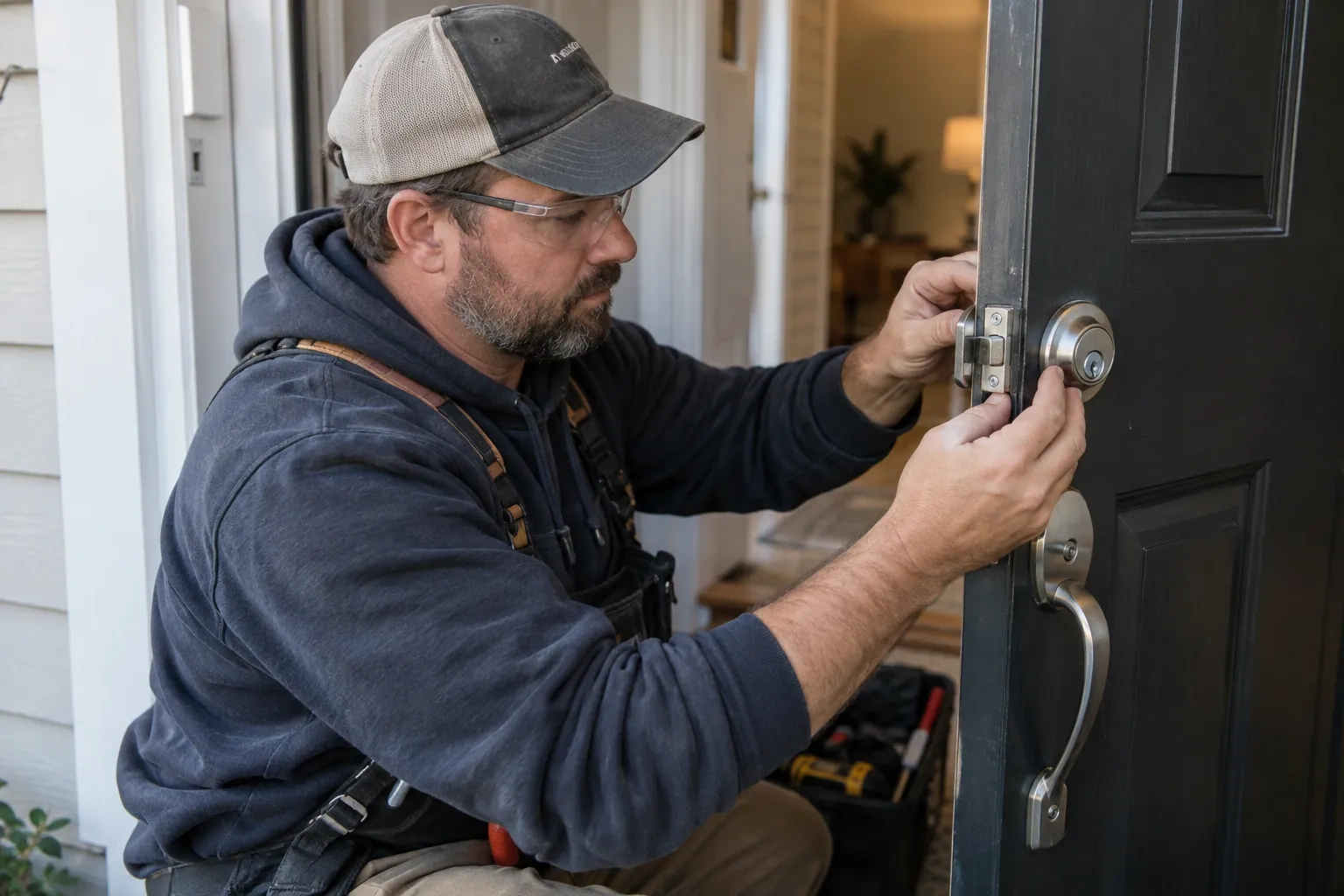
When the existing deadbolt is light or worn, the locksmith fits a graded deadbolt through the same bore where possible. The bolt throws a full inch and carries a hardened steel pin that turns under a saw blade, and the housing keeps part of the bolt supported against a kick. The latch is set in the edge bore with the correct backset, the exterior housing and interior thumb-turn are joined through the door with the long screws, and the final tightening is done by hand so nothing strips. The bolt is then thrown with the door open and closed to confirm it extends completely.
Proof for insurers, landlords and tenants
You leave with a written record of what was fitted: the cylinder type and its rating, the deadbolt grade, the strike and screws installed, and the key system registration. Insurers sometimes ask for this when a policy specifies stronger hardware, landlords keep it in the property file, and tenants have something to hand back at move-out. It also helps the next locksmith, who can see at a glance what keyway and format the doors carry. Keep the invoice and the key control documents together; they are the paperwork side of a physical upgrade.
High Security Locks
In the van
- Patented key blanks
- Hardened cylinder guard ring
- Pinning kit and plug follower
- Wrap-around door reinforcer
- Code key cutting machine
What affects the quote
Same fees day, night or weekend
1Master keying
Arranging staff keys, area keys and a manager key on one system takes bench time to plan and pin, and the more levels you want, the more careful that planning is.
2Strike and frame reinforcement
A reinforced strike with long screws is modest work on a healthy frame. Deepening the pocket, filling split wood, fitting a jamb plate or a wrap-around reinforcer adds materials and time.
3Distance and access
A rural property, a high-rise with loading dock rules or a site that must be visited outside trading hours affects travel and scheduling, and the quote says so plainly.
High Security Locks: questions
Can a hardware store or kiosk copy my new key?
No. The blank for a patented keyway is distributed only through the manufacturer's network to locksmiths who hold the system, and the side milling or angled cuts need a machine set up for that line. A kiosk would have neither the blank nor the cut. Extra keys come through your locksmith, cut from code, once an authorised person has approved the order. That routine is a small inconvenience compared with never knowing who has a copy.
What is the difference between restricted and patented keys?
A restricted keyway is one the manufacturer supplies to a limited set of dealers, so blanks are harder to obtain but not legally protected. A patented key design is protected by a patent for a fixed term, and making or selling the blank without permission is unlawful during that time. Patented systems give the firmer control; restricted ones give a useful step up. The locksmith explains which your chosen line uses and when any patent expires.
How long does the installation take?
A cylinder swap with new keys on one door is a short visit. A new deadbolt, reinforced strike and frame repair takes longer, and several doors keyed to a plan take longer again, mostly in bench time pinning cylinders. The locksmith gives you a realistic estimate once the doors have been looked at, because the frame condition and the door preparation matter more than the count of locks alone.
High Security Locks
High Security Locks near you
In Toronto the work spans everything on a door that turns, latches or bolts. Homes: lockouts, rekeys, replacements, deadbolts, smart locks, heritage hardware. Businesses: storefront locks, exit devices, closers, master key systems, safes. Read the service that fits and see how a visit runs from start to finish.