Change or rekey · Toronto
Deadbolt Installation
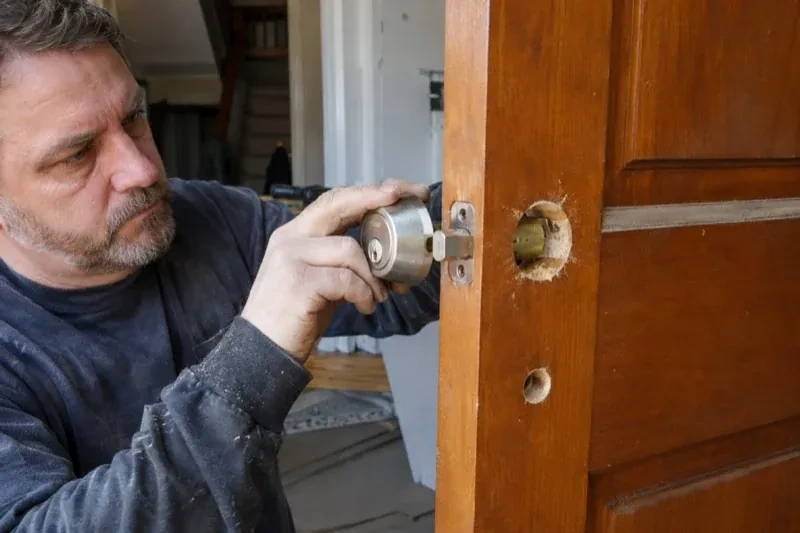
The front door has a handsome lever and a keyed knob, and that is all. Nothing above it.
Deadbolt Installation
In plain words
Most of the value in a deadbolt is on the frame side, which is why a good installation spends as much time on the jamb as on the door. The bolt is only as strong as the pocket it throws into and the screws that hold the strike. Short screws in a standard strike bite only into the thin jamb board; a reinforced strike fastened with 75 mm screws passes through that board into the stud behind, so a blow against the door meets the house rather than a strip of pine. The pocket is cut deep enough for a full throw and aligned so the bolt slides home freely.
How the visit goesThe front door has a handsome lever and a keyed knob, and that is all. Nothing above it. When the door is shut, the only thing keeping it closed is a spring latch the width of a thumbnail, and you have started to notice.
Toronto
How the visit goes
Glass, sidelights and what is within reach
Glass changes the conversation about which deadbolt to fit. A pane in the door or a sidelight within an arm's reach of the lock means an inside thumb-turn could be reached by breaking the glass, which is why double-cylinder deadbolts are sometimes suggested. The locksmith measures the distance from the glass to the lock, notes whether it is tempered, laminated or plain, and lays out the options: a captive thumb-turn that needs a key only when you choose, a laminated pane or a tested security film that can delay an arm, or moving the bolt height. The aim is a door that keeps a stranger out and still lets everyone inside leave with one turn of the hand.
Setting a strike that reaches the framing
A reinforced strike or strike box is centred over the pocket, squared to the edge of the jamb, and its outline is scored and chiselled to a depth that leaves the plate flush. Pilot holes are drilled, and the two holes nearest the door stop take 75 mm screws that pass through the jamb and the shim space into the stud behind, with shorter screws in the remaining holes. The long screws are driven by hand for the last turns so the heads seat without crushing the jamb. Where the jamb is thin or has been split by an earlier attempt, a full-length jamb reinforcer is fitted under the strike instead.
Keys that open what they should
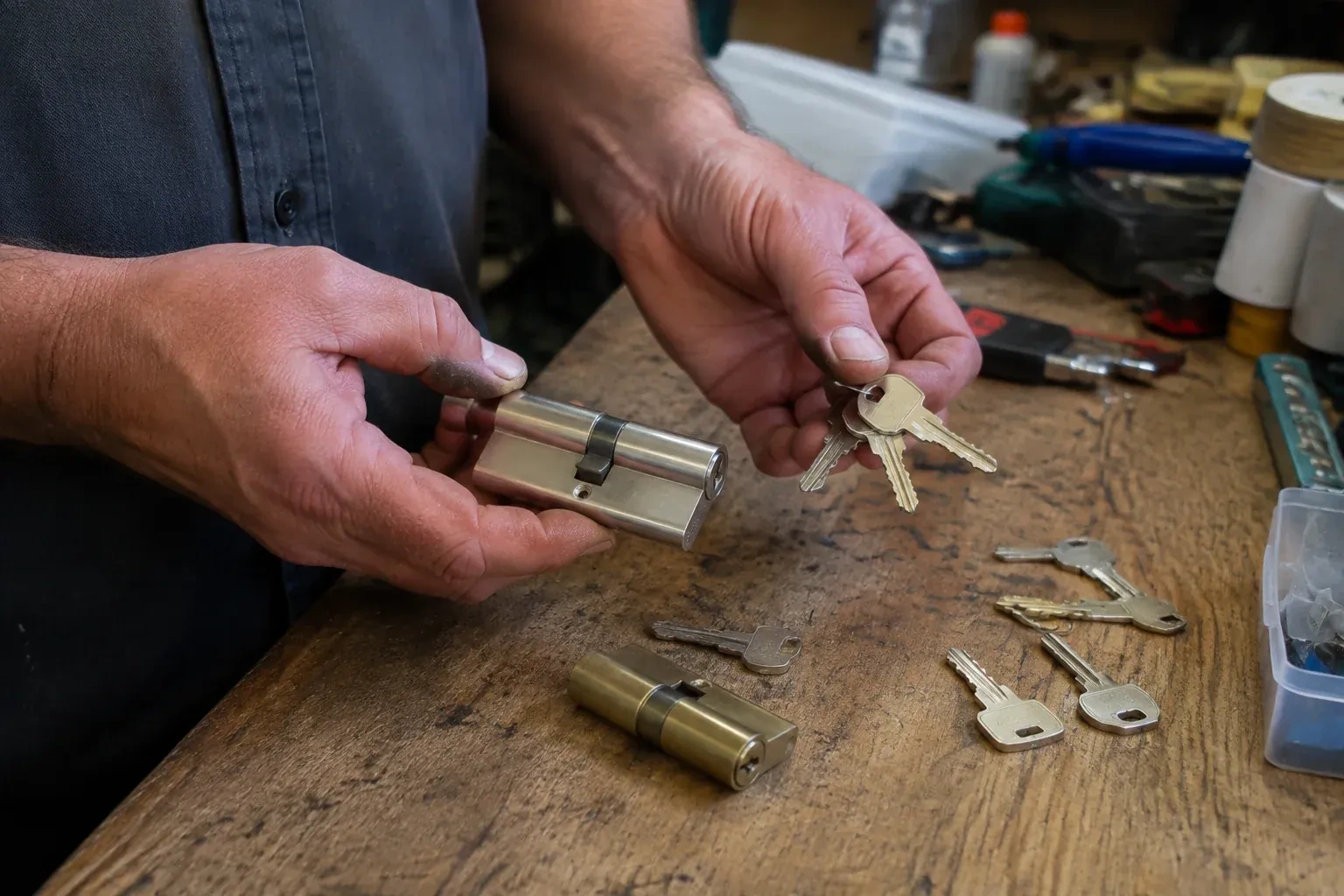
You leave with the keys sorted, whichever way you chose. If the new cylinder was pinned to your existing key, every ring in the house still works and the new door has simply joined the set. If it was set to a fresh key, you have a small bundle of new keys, cut from the pins rather than copied from a worn original, and a clear idea of which old keys no longer matter. Count them, decide who carries one, and test each in the new bolt before the locksmith leaves. A spare kept with a trusted neighbour or in a small lockbox is worth arranging on the same afternoon.
Deadbolt Installation
In the van
- Bolt faceplate or drive-in collar
- Boring jig and 54 mm hole saw
- Sharp chisel and mallet
- Rekeying pins and key blanks
- 75 mm (3 in) strike screws
What affects the quote
Same fees day, night or weekend
1Number of doors
One front door is the simplest case. Front, back, side and garage-to-house doors done in one visit share the travel and setup, so the per-door figure usually eases as the count rises.
2Removing and disposing of the old hardware
Some visits end with the old deadbolt and strike left with the homeowner, and others ask for it to be removed and hauled away. Taking the old hardware away adds a small amount of time and is agreed before the new deadbolt goes in.
3Keying alike or a fresh key
Pinning the new cylinder to your existing key, or setting several doors to a new key, is bench work quoted per cylinder, plus the number of keys you ask to have cut.
Deadbolt Installation: questions
Does a deadbolt work with a storm door or screen door?
It does, with one check: the thumb-turn and the outside cylinder have to clear the storm door when it closes. Most storm doors leave enough depth, but a low-profile deadbolt trim is chosen where the gap is tight. The storm door's own latch is separate and does not replace a bolt on the main door, since a screen frame gives little resistance on its own.
The door has to be pulled before the old bolt will lock. Will a new one fix that?
The new bolt will only lock as smoothly as the door and frame let it, so the locksmith deals with the cause as part of the installation. A door that has sagged on loose hinges gets longer hinge screws or a shim, thick weatherstrip is trimmed, and the strike is set from the bolt's actual position with the door closed. The pocket is bored deep enough for a full throw. Afterwards the bolt should slide with fingertip effort.
What happens during the visit, step by step?
The locksmith looks at the door, frame, glass and hinges, measures the bore and backset, and confirms the hardware and key plan with you. The door is bored or the old lock removed, the bolt is set to the backset, and the cylinder and thumb-turn are assembled. The strike position is marked from the bolt itself, the pocket bored, and a reinforced strike fastened into the framing. Everything is tested open and closed, keys are cut and tried, and the area is vacuumed.
Change or Rekey Locks
- Lock Replacement & UpgradeThe lever on the side door droops toward the floor and rattles in your hand.
- Vintage Mortise Lock ServiceThe knob flops loose on its spindle and never springs back to level.
- Smart Lock InstallationArthritis has made the small house key hard to grip and turn, especially with gloves on in January.
Deadbolt Installation near you
In Toronto the work spans everything on a door that turns, latches or bolts. Homes: lockouts, rekeys, replacements, deadbolts, smart locks, heritage hardware. Businesses: storefront locks, exit devices, closers, master key systems, safes. Read the service that fits and see how a visit runs from start to finish.