Commercial · Silverthorne
Commercial Rekeying in Silverthorne
The drawer behind the counter holds a tangle of keys with tape labels: front old, side, Dave. Some open things, some open nothing, and the hardware-store copies mean the true count drifted long ago past anything written down.
Commercial Rekeying
In plain words
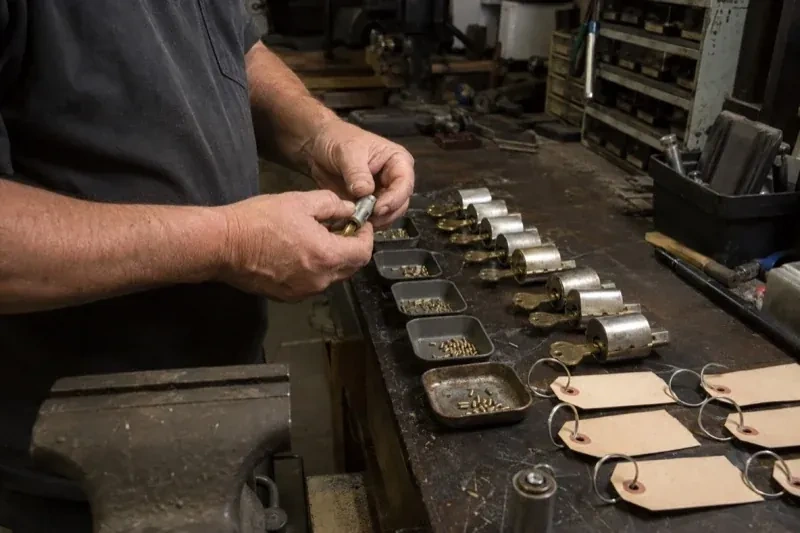
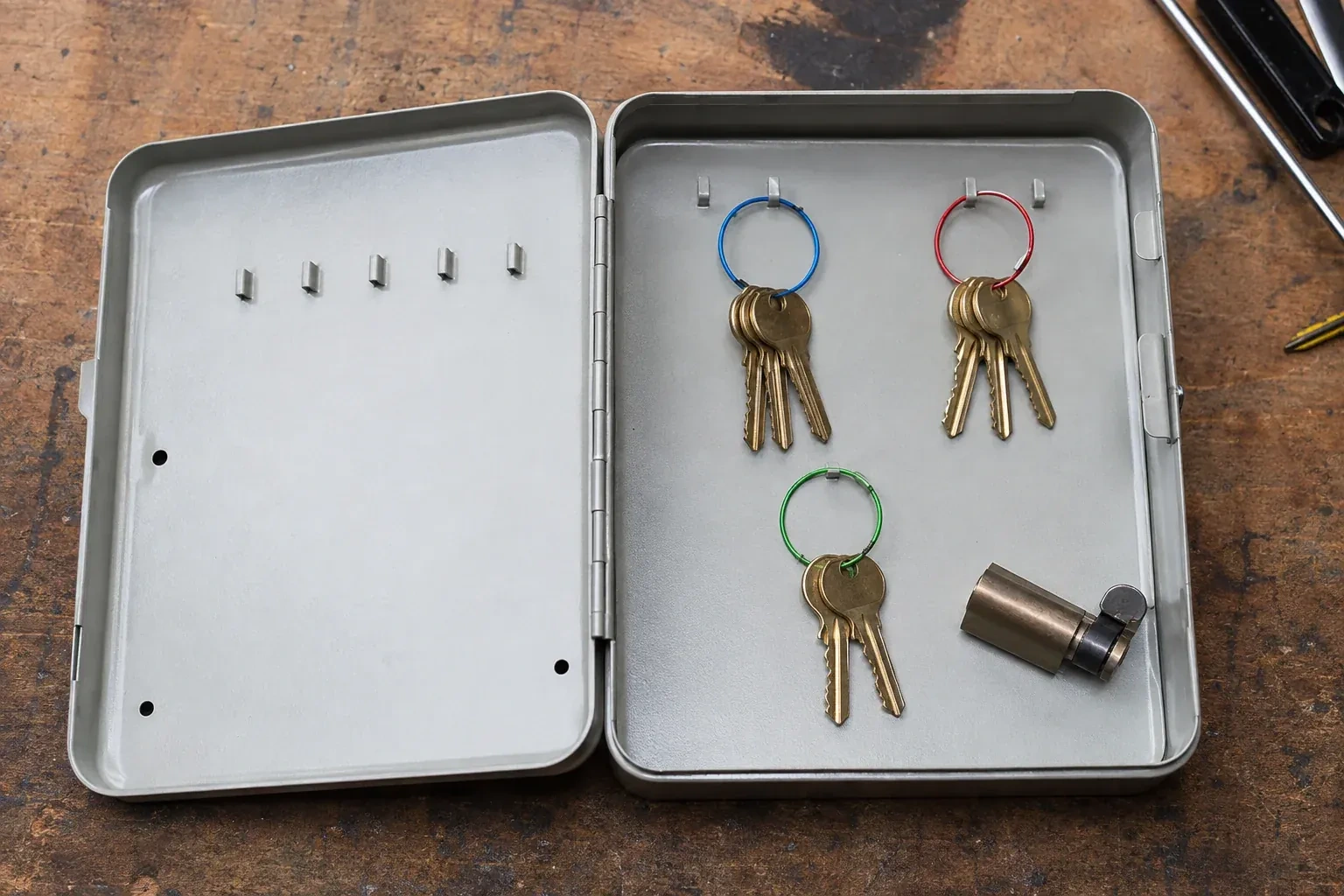
Rekeying is also a chance to decide how the keys should work, not simply to change them. Most businesses settle on a small number of key groups: one key for the doors every employee uses, another for the office, cash room or server closet that only managers open, and perhaps a single master for the owner that opens everything. The locksmith maps this out on a keying chart before touching a cylinder, then pins each lock so the plan holds true on the door. Staff carry one key instead of a ring, managers carry two, and the chart tells you at a glance who can open what.
How the visit goesTwo people left over the summer and the keys they handed back came up one short. Nobody is sure whether the missing key was for the front door, the stockroom or both, and the sign-out sheet stopped being filled in a year ago.
Silverthorne
How the visit goes
Who is entitled to order the change
Every commercial rekey starts by confirming that the person asking for it has the standing to do so. For a small business that is usually the owner or a director; for a larger one, a facilities manager or property manager acting under written authority. The lease matters here too, because it decides which doors are the tenant's to alter and which remain the landlord's, and many leases ask that the landlord be given a key or told when locks change. Getting this straight before any cylinder comes out protects the business, its neighbours in the building and the locksmith, and it means the finished keying chart lands in the right hands.
Padlocks, cabinets and the mailbox
A business is more than its doors, and the same visit brings the smaller locks into the plan. Rekeyable padlocks on the compound gate, the propane cage or the roll shutter can be pinned to the same key as the back door, so the opening crew carries one key instead of four. Filing cabinets, the till drawer, a medicine or chemical cupboard and the display cases can be keyed alike for the staff who use them or kept separate for the manager. The lobby mailbox, which often still answers to a key from two tenants ago, gets a fresh cylinder or is repinned where its design allows. Each small lock is added to the chart alongside the doors.
Adding a door without starting over
The pinning records kept from the visit mean the system can grow. When the business takes the unit next door, adds a storage cage or replaces a worn lever set, the new cylinder is pinned into an unused combination on the existing chart and handed a key from the right group, and nobody already carrying a key notices anything changed. That is the value of leaving reserve combinations in a master system rather than using them all up on day one. Keep the locksmith's reference number for the system with the chart, mention it when you call, and a single new door becomes a short visit instead of a fresh plan.
Commercial Rekeying
In the van
- Standard and restricted key blanks
- Key stamp set and tags
- Code key machine
- Plug follower
- Master pins
What affects the quote
Same fees day, night or weekend
1Landlord and base-building coordination
Suite doors that must accept both your key and the landlord's master, or work that needs the property manager on site, add coordination the quote allows for.
2Documentation and register
A keying chart, a key register and stamped codes on every key are part of a proper commercial rekey, and the quote names the paperwork so it is never skipped.
3Mix of lock types
A key-in-lever cylinder, a storefront mortise cylinder, a back-door rim cylinder and a padlock take different handling, though several full-size formats can share one pin kit for the same key system; a premises with a wide mix of cylinder types and brands still takes longer than one with one.
Commercial Rekeying: questions
Is a restricted keyway worth it for a business?
A restricted keyway uses blanks that only the locksmith or authorized source can obtain, released against whatever that key-control program requires, a signed letter, card, signature record or factory authorization naming who may order keys. Hardware stores and kiosks have no blanks, so copies are far harder to get without your say-so. It costs more per key than a standard keyway and is most valuable where keys pass through many hands, such as retail with part-time staff, shared premises or anywhere the count of copies has drifted before.
How many keys should we have cut?
Count the people who need each group, add one spare per group for the safe, and stop there. Extra keys cut 'just in case' are the ones that end up unaccounted for. Because the keys are cut to code from the pinning records, more can be produced later to the same standard, so there is no need to stockpile on the day. Restricted keys are ordered by the named signatories when needed.
What condition does a lock need to be in to be rekeyed?
It needs a plug that rotates without catching, pins that return under their springs, and a face free of heavy corrosion or cracks. Most commercial cylinders in daily use pass easily. Ones that are stiff, gritty or green with salt bloom can sometimes be cleaned and repinned, and the locksmith will say when a replacement for that door is the better value; the rest of the doors are rekeyed regardless.
Commercial Locks
- Access Control InstallationSomething went missing from the storeroom over a weekend, and when you ask who was in the building…
- Panic & Exit HardwareThe daycare wants the yard gate and the classroom door alarmed so a staff member hears the moment…
- Commercial-Grade Lock ReplacementThe electric strike buzzes the moment the receptionist presses the release button, but the door…
Commercial Rekeying near you
Here is the range of lock work we do for homes and businesses in Silverthorne: opening doors when the key is missing, rekeying and changing locks, fitting deadbolts and high-security cylinders, servicing commercial hardware, opening and resetting safes, and cutting keys, including the occasional vehicle key when a household needs one.